
Synergy of gut health and nutrition found to slow biological aging.Support your microbiome.
A landmark double-blind controlled trial published in the Journal of Ageing and Longevity identified a nutritional intervention combining probiotics and plant-based phytochemicals that significantly improved testosterone, strength, and inflammation — key hallmarks of longevity.
The study highlights the important relationship between the gut microbiome, phytochemical-rich foods, inflammation, and healthy aging.
The gut microbiome plays a central role in healthy aging.
The rate of ageing is a complex interplay between genetics, environment, and lifestyle. As we age, systemic inflammation increases, grip strength declines, and testosterone levels in men tend to fall — all of which can be measured as estimates of biological age.
People whose biological age is greater than their chronological age may have a higher risk of chronic degenerative diseases, including arthritis, cancer, diabetes, stroke, heart disease, and dementia.
The gut microbiome also deteriorates with age, becoming less diverse and more inflammatory. People with poorer gut microbiome balance, or dysbiosis, can experience impaired immune surveillance, more oxidative stress, and higher whole-body inflammation.
Gut dysbiosis is linked with inflammation, oxidative stress and lower resilience.
Dysbiosis is increasingly recognized as being linked with lower age-adjusted testosterone levels and muscle strength, both of which are key biomarkers of longevity.
A healthier microbiome supports key immune defense pathways and helps the body respond more effectively.
People with poorer gut microbiome balance may experience more oxidative stress and higher inflammatory burden.
Systemic inflammation is one of the measurable markers connected to biological aging and resilience.
Gut health has been linked with age-adjusted testosterone and muscle strength, both important for longevity.
Testing probiotics and phytochemicals together.
Although links between longevity, gut health, and phytochemicals are compelling, it was less established whether prospective nutritional interventions could slow the natural rate of decline.
Study Setting
Conducted at the Oncology Department of Bedford Hospital, part of the Cambridge University Hospitals network.
Research Partners
Partners included the Institute of Sport Science Bedford University, University of California, and Edith Cowan University in Australia.
Study Design
208 men with an average age of 74 received Your-Phyto and were randomized to YourGutPlus+ or placebo for four months.
YourGutPlus+ and Your-Phyto were evaluated together.

YourGutPlus+
The probiotic intervention contained 10 billion colony forming bacterial units, plus prebiotics including inulin and vitamin D in a delayed-release shell.
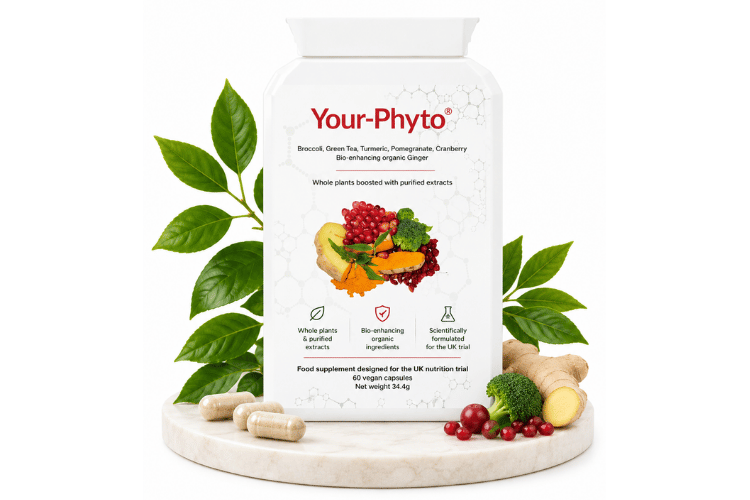
Your-Phyto
The phytochemical-rich supplement contained fortified broccoli, green tea, pomegranate, ginger, cranberries and turmeric.
The results exceeded expectations.
The intervention significantly improved three measurable biomarkers of longevity: grip strength, systemic inflammation, and testosterone.
Grip strength improved from baseline to the end of the four-month intervention.
Greater grip strength improvement was observed in men randomized to also take the probiotic complex.
Systemic inflammation, measured by neutrophil-to-lymphocyte ratio, was lower in the combined arm.
Average serum testosterone level at four months was higher in the combined arm.
The grip strength difference in the combined group was highly statistically significant.
Supplements complied with international food standards and were made with Good Manufacturing Practice certification.
Probiotics and phytochemicals work together.
High-fiber, fermented, probiotic-rich plants supply the gut with healthy bacteria, while phytochemicals help them colonize, displace unhealthy varieties and thrive.
Fiber and prebiotic phytochemicals found in broccoli, cranberries, tea and ginger help form short-chain fatty acids such as butyrate, which provide energy for favorable bacteria and the cells lining the gut wall.
This synergy is mutual: probiotic bacteria also help break down phytochemicals into more readily absorbed, bioactive subunits, enhancing their health benefits.
Boosting dietary lactobacillus and phytochemical-rich foods may support biological aging.
This nationally ethically approved scientific trial provided evidence that boosting dietary phytochemicals and lactobacillus with specifically designed capsules can reverse physical and biological decline in three measurable biomarkers of longevity.
Although longer duration trials are planned, this data suggests that practical nutritional tools may support lifestyle strategies designed to reduce biological age and help people live stronger and healthier for longer.
Study reference and scientific standards.
Full Reference: Thomas R, Williams M, Aldous JF, Kenfield SA, Newton RU. The Effect of Boosting Dietary Lactobacillus and Phytochemical Rich Foods on Biomarkers of Longevity – A Phase II Randomised Placebo Controlled Trial. J. Ageing Longev. 2026, 6, 35. https://doi.org/10.3390/jal6020035.
Compliance: The manufacturers ensured the Your-Phyto and YourGutPlus+ supplements complied with international food standards including heavy metal, pesticide and microbial analysis. They were made in the UK with Good Manufacturing Practice certification.
Ethics + Registration: The Hospital Research and Development and UK National Ethics committees approved the protocol and amendments under IRAS: 321309. The trial was logged with the UK Clinical Trials Registry under ISRCTN: 81939514.
Conflict of Interest: No member of the scientific committee received financial incentive for the study, and no authors had financial connections to the manufacturers who supplied the capsules to the trial unit free of charge.
Support your microbiome, nutrition and healthspan.
Explore YourGutPlus+ and Your-Phyto to support a proactive daily wellness routine inspired by gut health and longevity research.